Tree Removal vs. Tree Trimming: How to Tell Which One Your Spokane Tree Needs
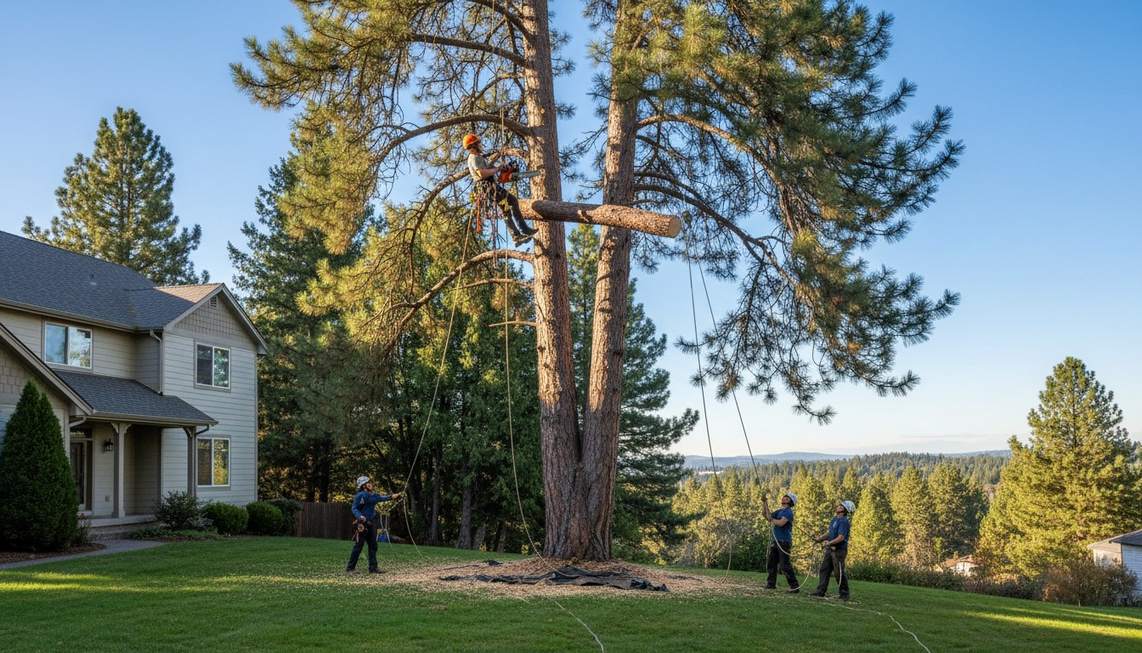
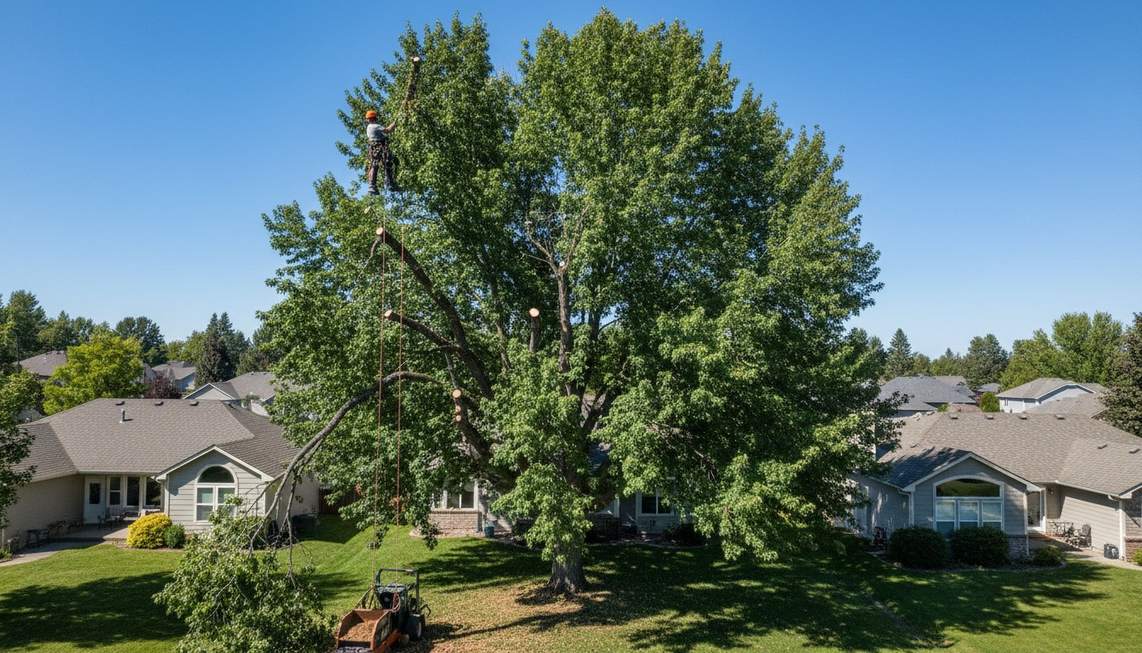
Removal takes the whole tree down. Trimming keeps it standing and fixes what's wrong with it. Most homeowners can tell which one they need once the signs are laid out side by side.
Does Your Tree Need Removal or Trimming?
If the tree's structure is failing, if it is dead or more than half dead, leaning worse than it used to, cracked through the trunk or a major limb, or losing its grip on the roots, removal is the safer call. If the tree is structurally sound and the problem is really about shape, clearance, or a handful of dead or damaged branches, trimming almost always fixes it, and it costs less than removal. Spokane Tree Pros does both under one licensed, bonded, and insured crew. A free estimate over the phone settles the question for your specific tree. Call (509) 632-4080 and describe what you are seeing. We will tell you honestly which one it needs, not which one is more profitable for us.
What Each Service Actually Is
Tree removal: the whole tree comes down
Removal means the entire tree, trunk and all, gets taken apart and hauled away. It's the last resort, for when a tree's structure has failed or is failing: disease, rot, storm damage, or a lean that gets a little worse every winter. The crew reads the lean, sets rigging points, and lowers the tree in sections into a clear drop zone instead of trusting one big cut. When it's done, the branches are chipped, the wood hauled off, and the lawn raked clean. If you want the stump gone too, stump grinding rides along on the same visit.
Tree trimming: the tree stays, the problem gets cut out
Trimming, also called pruning, means selectively removing specific branches while the tree stays standing and keeps growing. There are three techniques: crown cleaning (removing dead, dying, and rubbing branches), crown reduction (bringing the tree's overall size down honestly, cutting back to a lateral limb, never topped), and crown raising (lifting the lowest limbs for clearance over sidewalks, driveways, or rooflines). When done right, trimming improves the tree's health and shape while keeping it natural. See the full breakdown on the tree trimming page or the tree removal page for how each visit runs start to finish.
How Can You Tell Which One Your Tree Needs?
This is the real test. Walk around the tree and check the trunk and roots, not just the branches. That is where the answer is.
Signs it needs removal
- The tree is dead, or more than half the canopy has gone over to dead wood
- Mushrooms or shelf fungus at the base or on the trunk, the visible edge of rot working through the wood
- A lean toward the house, driveway, or a power line that has visibly worsened over time
- A trunk or major scaffold limb cracked by storm, lightning, or nearby construction
- Disease or insects, pine beetle chief among them here, past the point of recovery
- Roots cut, crushed, or heaved by construction, paving, or excavation, loosening the tree's anchor
- A tree pressing hard against a structure or crowding out the light healthier trees need
Signs it just needs trimming
- The trunk and root system are sound, the problem is up in the branches
- A handful of isolated dead limbs on an otherwise healthy tree
- Storm-torn or broken branches that did not take the trunk with them
- A canopy crowding the house, a walkway, or a roofline that needs clearance
- Crossing or rubbing branches that are wearing on each other
- A lopsided or overgrown crown that just needs shape and size brought back down
- A tree that has not been pruned in two to three years and is due for routine maintenance
If you are not sure which side of the line your tree sits on, that is exactly what the free estimate over the phone is for. An arborist checks the trunk and root flare, not just what is visible from the driveway, and tells you plainly which one your tree needs. If pruning solves it, pruning is what gets recommended. We do not talk homeowners into removing trees that can be kept safely.
How Do Cost and Time Compare?
Trimming almost always costs less and takes less time than removal, because pruning a live tree in place takes less rigging than dismantling the whole thing and hauling it off. Beyond that, both prices move with the same factors: the tree's height, how dense or awkward the crown is, and how close it stands to a house, fence, or line. Neither one has a fixed number. The honest figure comes from a free estimate over the phone.
| Tree Trimming | Tree Removal | |
|---|---|---|
| What happens to the tree | Stays standing. Selected branches come out, the tree keeps growing. | Comes down entirely, sectioned and lowered, then hauled away. |
| Typical time on-site | Roughly one to three hours for a routine visit on a single tree. | Four to eight hours for a large tree, a full day in a tight yard. |
| What drives the price | Height, canopy density, how many branches come out, access. | Height, trunk diameter, what sits in the drop zone, access. |
| Relative cost | Lower, less rigging and time than a full takedown. | Higher, especially near structures where every section is roped down. |
| How pricing works | Free estimate, priced on-site | Free estimate, priced on-site |
These are relative comparisons, not fixed prices. The tree's size, how many branches or sections have to come out, and whether the crew can reach it with equipment or has to work by hand all move the actual number. Call (509) 632-4080 for a free written estimate over the phone before you decide anything.
What Three Questions Settle It?
1. Is the trunk sound? Check for mushrooms, cracks, or soft, punky wood at the base. A sound trunk almost always means trimming. A compromised trunk usually means removal. No amount of pruning fixes rot at the base.
2. Is the lean new or worsening? A tree that's always leaned a little and stayed stable is usually fine. A lean that's visibly getting worse is a structural warning pointing toward removal, especially after a soaking week or one of the windstorms that roll through the Inland Northwest in the fall.
3. Is the problem in the branches or the roots? Dead or crowded branches on an otherwise healthy tree are a trimming job. Roots cut by construction, heaving a driveway, or losing their grip are a removal-level problem. The tree's anchor is compromised.
Answer those three and the choice is usually obvious. Still not sure? Call (509) 632-4080 and describe the tree. The same licensed, bonded, and insured crew handles both, and the free assessment gives you the straight answer.
Tree Removal vs. Trimming: FAQ
How do I know if my tree needs to be removed or just trimmed?
Is it ever cheaper to just remove a struggling tree instead of trimming it?
How much does tree trimming cost compared to tree removal in Spokane?
Can a tree be saved with trimming even if it looks bad?
How long does trimming take compared to a full removal?
What if part of my tree is dead but the rest looks healthy?
Do you push removal because it costs more than trimming?
How long does a trimming visit take compared to a removal?
Can a leaning tree be saved with trimming?
What does it cost to trim a tree versus remove it?
Contact Spokane Tree Pros
Not sure which one you need? Ask on the call.
Describe the tree and the crew will tell you honestly whether it needs removal or trimming, free, no obligation.
Call (509) 632-4080Free estimate over the phone Estimate Your Job in 30 SecondsSize up your job on the home pageFree estimate. No obligation.